

 el Don News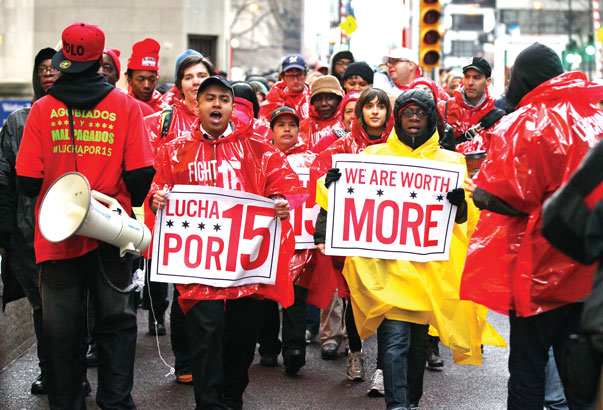
By: Alex Olivares
At Macy’s there are dozens of employees in various departments sweeping, cashiering and stocking. They work together but about a fifth of them have been hired to cover hours not part-time but temporarily.
As of December, almost three million jobs in the nation are temporary, according to the Department of Labor. That figure is a record high and is expected to grow as temps continue to cut costs for employers. This further shrinks the presence of permanent workers as they become less desirable. They must exercise their right to unionize or else maintain multiple jobs just to get by.
“The temp workers have been increased a lot since 2008,” says a Macy’s sales manager who withheld his name to protect his job. “All the managers think that’s when it became more prevalent during holidays.”
Following the recession, temporary jobs have become a retailer’s solution for short staffing during holiday sales. However, temps have become cost-effective year-round because they typically don’t work the hours needed to qualify for benefits.
“Each department is 20 percent on-call workers,” the manager says, explaining that temps are requested to show up with little notice for back-up or to cover an absent co-worker.
Cashiers make about $18,000 annually, according to the Retail Action Project, a union think tank, so those shifts going to temps might otherwise help a part-time worker survive.
With no leverage of their own to make retail a livable occupation, employees must organize. Alone, they have no power to bargain. Together, they can demand hours and benefits.
Union contracts can guarantee wage increases, stable hours, health insurance and pension plans, says Kim Ortiz, an organizer for The Retail, Wholesale and Department Store Union. The RWDSU represents about 100,000 workers nationally.
“They have middle class jobs,” she says about employees she’s helped unionize. “They’re surviving, they’re vacationing and they’re in retail.”
Last month, the Bureau of Labor Statistics reported that unionized retail workers earned almost $1,200 more a year than those unorganized.
Large employers can afford to pay executives ludicrous salaries. With income inequality at its height, workers must not be complacent with stagnant wages nor believe that they cannot fight large corporations.
Ortiz, who shows pride when talking about her success in organizing three Guitar Center stores, said, “We took on Bain Capital. That’s Mitt Romney, so it can be done.”


