

 el Don News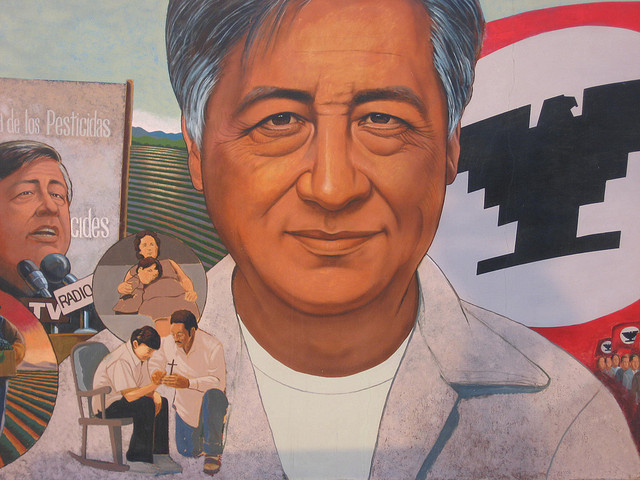
By Rogelio Santana
For more than fifty years civil rights activist and labor leader Cesar Chavez led United States farm workers in organized boycotts, pickets and strikes using non-violent methods.
“Non-violence is a very powerful weapon. It is the willingness to sacrifice. It is the patience to win,” Chavez said.
Chavez was born in Arizona and migrated between there and California throughout his life. Working in the fields after graduating middle school, he saw the injustices workers experienced and made a passion out of fighting for better conditions.
Chavez was working to unite local farm workers when in 1952 he met experienced grassroots organizer Fred Ross, who became a mentor to him.
“When you have people together who believe in something very strongly – whether it’s religion or politics or unions – things happen,” he once said. “Fred did such a good job of explaining how poor people could build power that I could even taste it.”
Chavez later co-founded the National Farm Workers Association, now known as the United Farm Workers. The organization uses “Si Se Puede” (yes, we can) as their slogan.
Among the many issues Chavez rallied for was voter registration, higher wages and unionized labor.
Chavez often made sacrifices to bring emphasis to causes. He once fasted for 36 days during a nationwide boycott demanding better pay and working conditions for grape and lettuce workers.
“We have our bodies and spirits and the justice of our cause as our weapons,” he said.
Chavez died in 1993 and received the Presidential Medal of Freedom the following year. His birthday is a celebrated as a state holiday in California, Arizona and Texas.
Fred Ross was a trailblazer in the grassroots organization movements, known for his ability to urge oppressed people to rise against injustices and take action.
“A good organizer is a social arsonist who goes around setting people on fire,” he once said.
His training helped mold some of the biggest influences on labor laws. Among his protégés are Cesar Chavez, Dolores Huerta and Marshall Ganz, President Obama’s 2008 campaign field manager.
At a labor camp in his 20’s he realized the injustices faced by dissatisfied workers and trained them on how to stand up for their rights. He organized pickets and protests using grassroots methods, recruiting ordinary citizens by going door-to-door and relaying his courses of action to each individual.
“My goal was to help people do away with fear; fear to speak up and demand their rights.”
Ross died in 1992. There is currently a petition to award him a Medal of Freedom.


