Talan Garcia
Photos by Dylan Burch, Giovanni Castro and Christopher Michael
Driving down Bristol Street from Santa Ana College, you first notice the 7-Elevens, crowded bus stops and run-down strip malls that sit on nearly every corner. Flower vendors are spread along the roads while loads of students, bike riders and old heads pass by. Palm trees distract from the never-ending construction, barring bike lanes, playgrounds and open fields from use. Instead, they sit open and empty. On every other block lay long plots made up of concrete blocks, piles of dirt and metal pipes. The streets are shrouded with orange cones and caution tape. By sunset, cranes and bulldozers wait around with no operator in sight.
As you make your way across Warner Avenue, the scene slowly changes. Freshly trimmed grass, more modern buildings, and a sudden heap of trees begin to show themselves. Skyscrapers start to line up along the horizon. Where did all the people go? It seems as though passing through the Santa Ana-Costa Mesa border is a crossing between two different worlds.
Only a few hundred feet on the Santa Ana side sits the Metro Town Square mall, a once-hip spot where teased hair teens in the ‘80s would congregate to shop, flirt, and pass the time. The place has dried up since its opening in 1973 and has since become a sea of empty parking spaces and drive-thrus. If it weren’t for a few cars parked, it’d feel like you were passing through a ghost town, full of giant vacant buildings and large crossways leading to nowhere. There are for lease signs and the visual outlines of where the storefront signage used to be. A few establishments still hang on: Boiling Crab, Ross and TJ Maxx.
They won’t last long.
In October 2024, Santa Ana City Council unanimously voted to demolish the strip mall and allow a $4 billion residential and commercial project named Related Bristol to take its place. The project is Santa Ana’s most expensive development to date.
The mall now sits idly as the luxury developer, Related California, prepares to transform the 41 acres into a “mixed-use urban village,” a plan that includes 13.1 acres of greenery, 350,000 feet of commercial space, residential apartments, senior care housing and a swanky hotel.

The build is controversial in a time in which residents complain of gentrification swallowing up the city, while problems like a parking crisis, homelessness and lack of affordable housing grow more rampant and consistently push long-time residents out. Because of this, the Related Bristol project has come to be seen by many as the first in a series of blows that will fundamentally upend Santa Ana, transforming it from a city of immigrants and working-class families into a playground for the wealthy.
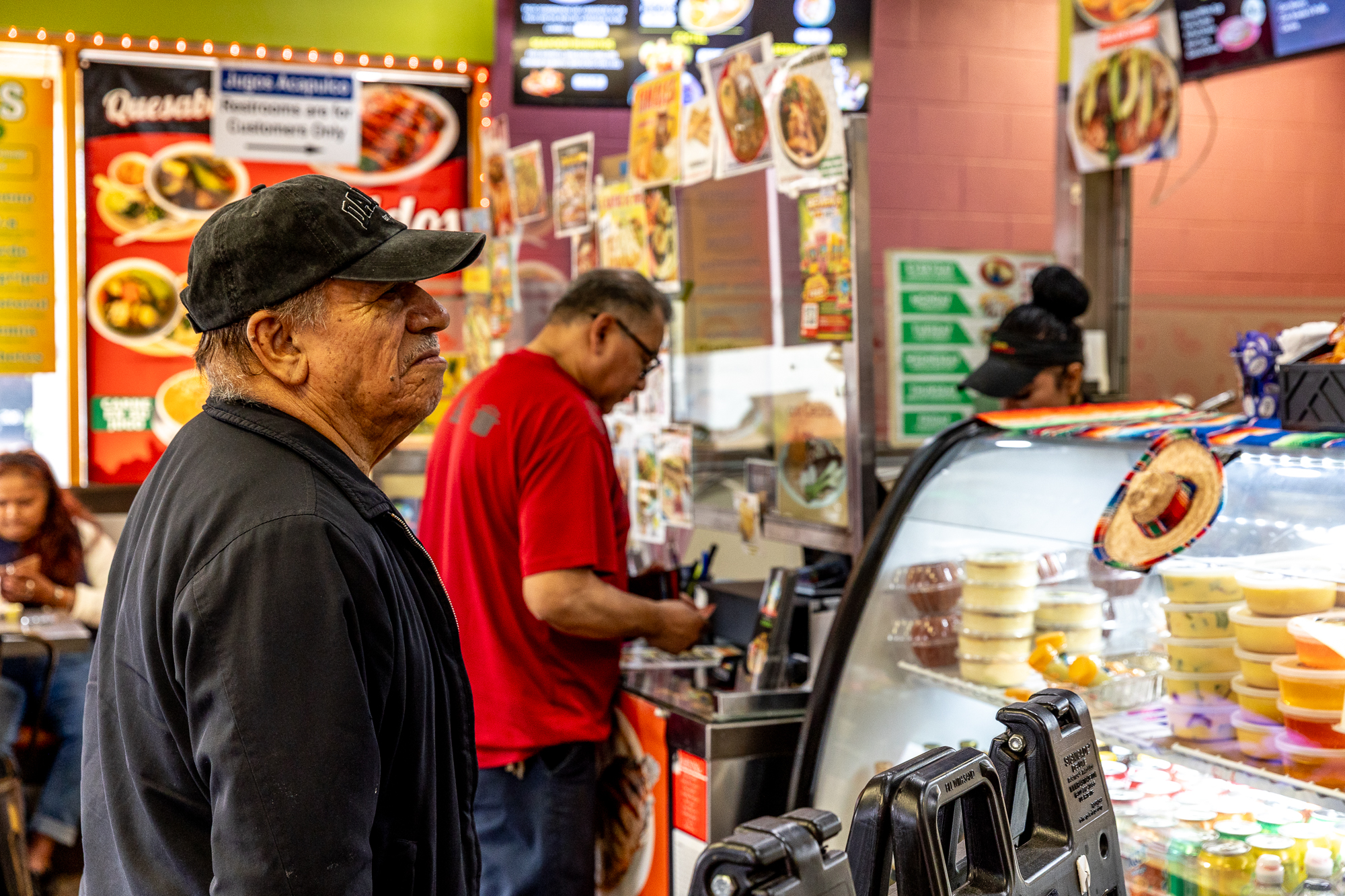
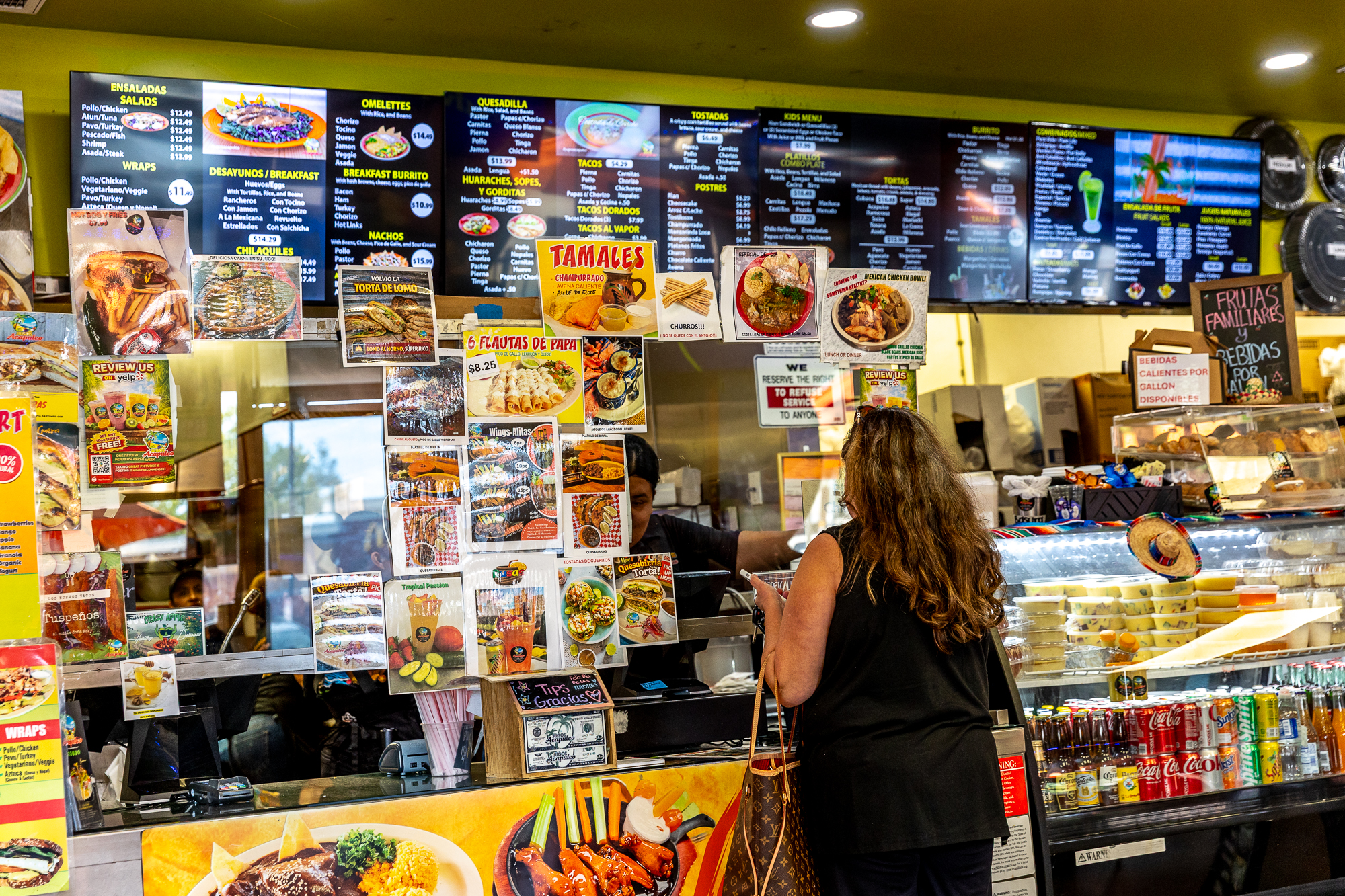
I decided to meet with my homegirl at Jugos Acapulco on First Street, one of my go-to breakfast spots, to discuss my reporting. Posters advertising ensaladas de frutas, platillos, tamales, postres y jugos naturales in different colors and texts were plastered around the order window like an experimental collage. Bright yellow walls and faded signage of various fruits adorned the walls around us.
There were Latinos of all ages inside, and it was a busy morning. To my left was an abuelita and her granddaughter sipping caldo de res; in line, a middle-aged couple held each other by the hips as a young lady wearing tight jeans and a tiny top loudly ordered a torta de asada. Singles were scattered about the room scrolling on their phones, donning Dodger hats and black leather purses, patiently waiting for their numbers to be called on the loudspeaker.
We sat outside observing the bike riders and young moms passing by as Spanish ballads blasted out from the speaker behind us into the parking lot. Despite my broken Spanish, my huevos con jamon were made with the same love as usual. As we finished our food, my friend’s neighbor, known locally as Doña Concha, passed by wheeling her carrito packed full of empty bags. She had silver hair and a sweet, freckled face. I greeted her and began chatting as my friend helped translate.
Concepcion Lopez, or la Doña, has lived in the area since moving here from Mexico about 35 years ago. Since then, she’s noticed a major shift.
“They don’t want Hispanics here anymore, they only want Americans. And the Americans don’t even eat, all they do is drink. Well, that doesn’t affect me. I’m not the type of person who’s out dancing in the middle of the night,” said Doña Concha.
“However, what has affected me is the raising of rent. Oh my god, the rent is so expensive everywhere! You go to the market with $100 and come back with practically nothing, just tomatoes and chiles.” I then thanked her for her time, and she carried on her stroll, smiling now.
Gentrification has sunk its teeth into Fourth Street as well, where the OC Streetcar project has blocked the entrances of several historic businesses. An influx of high-end apartments and tourism-focused spots are popping up on the popular downtown street where safe spaces like the Northgate Market and Velvet Lounge once stood.
Vaquero shops are being replaced by upscale restaurants brought in by outsiders. Basic costs are rising quickly. I had to pay around $10 for parking almost every shift when I worked in the area last summer. Those parking lot prices have gone up again since the start of the new year. All over the city, these changes are not going unnoticed.
“It seems like Costa Mesa is bleeding over this way,” said Eric Brenton, a 20-something blond nurse who rents nearby. “These kinds of projects have been the trend. This really changes the landscape. It’s gonna look much different, be much busier. I see what they’re trying to do, and with everything happening both economically and politically, it’s a bit out of touch.”
Brenton added in a near whisper: “They’re trying to build up these areas, and I get the sentiment, but it’s disconnected from the actual public’s needs. Everybody is pressed for cash right now.”
Some residents have expressed that the area could use a makeover, but others would argue back that it’s new developments and outside investors that have gobbled up real estate and jacked up the prices that caused business owners to pack up in the first place.
“I think this is something to look forward to…I mean, this place could use a facelift. The old look isn’t that good,” shared David Scheller, a local shopper.
The Bristol project is projected to take up to 20 years, moving in five major phases. The first phase, named Project Groundbreaking, should demolish the site’s southern half and begin construction the same year. The row of shops that fall within these borders have their leases ending on Jan. 1, 2026. As of March 2026, most businesses report still having no idea of when they’ll be ordered to close shop.
Some of the mall’s long-standing businesses, like Han’s Homemade Ice Cream, were expected to relocate by said deadline. Instead, these businesses sit waiting until the first phase begins. The 52-year-old deli and creamery is known as a local staple to many. Walking in feels like entering a portal into the ‘70s with the dark green booths and washed-out signs hanging on its dark wood paneling. I watched as workers chopped it up with regulars, cooks chatted in the kitchen, and a father and son quietly worked on their cones as they stared out a huge window.
Han’s has been promised a future storefront by Related California, but will have to relocate nearby until the project is completed. Eric Wagner, the store’s manager for the last 20 years, was not enthusiastic about the developers’ plans for the ice cream shop.
“With the way the economy is going, this is going to be a disadvantage to us. What are they gonna charge our customers to park?” Wagner asked, his green eyes moving around. “If I have to pay $20 to go somewhere, I just won’t go.”
Wagner wrinkled his brow as he told one of the young workers to get to work on the next batch.
“It’s so corporations can make money. It doesn’t make the place better. It makes the people who actually live in this community and actually pay taxes and support this community for generations get kicked out,” he continued, getting louder by the minute.
Wagner added, “This is my city, I’ve been here. These people who bought this haven’t been here. They don’t live here, and they don’t care about us.” Wagner was almost shouting now. The dad and son sitting by the window watched as he brusquely wrote his contact information on a food ticket and sent me off.
Wagner may not be a corporate investor, but his hunch is spot on. The benefits of this development are purely fiscal. The project is expected to make $500 million in net revenue to the city in its first 30 years, which would be spent on fixing prioritized issues.
Benjamin Vasquez, Santa Ana City Council Member, was one of the six unanimous votes in the city council that passed the divisive project. I mentioned to him over the phone the complaints I’ve heard of redevelopment being prioritized by the city over homelessness, a parking crisis and lack of affordable housing.
“This is not coming from public funds,” Vasquez explained. “They are giving us money. Hopefully, with the taxes that are generated, that money can go towards all of those other concerns. But we didn’t get as much as we could out of it.”
On top of the tax revenue, the developer paid an additional $22 million as a “community benefit payment.” Vasquez would like to see this benefit go toward a potential park, library or community center.
“There was not much negotiating for the dais. I would’ve wanted more money for affordable housing, that’s where I would’ve pushed for more, but then it could’ve been a 3-3 and then a no to do it,” Vasquez explained. “Then we would’ve lost the project that would’ve serviced us, to build not the type of housing that we need, but the type of housing that’ll bring us tax revenue. And we need that.”
Related California paid $18 million in “in-lieu” fees as an agreement to fund affordable housing somewhere else within the city, instead of giving a percentage of their own apartments to the cause.
Roman Reyna, a lifelong local and former councilmember for Wards 4 and 5, expressed his distaste for the city’s option for developers to opt out. By allowing developers to pay fees instead of including affordable units on-site, the city risks creating luxury enclaves with little benefit for existing residents.
Reyna explained over the phone: “By default, that creates the ghetto. Because now 4 or 5 developers did that, this one area is gonna be left with affordable housing. So by default, now it’s kinda like the projects, where instead of them integrating with higher-end apartments and different personnel, they’re kept separate. I’m curious to find out how many that get in [the new apartments] are actually from Santa Ana.”
“I have more worries than hope, but it’s challenging. Because the intent is to help the people that live there, but if you renovate a certain area, you may have to remove people so you can make that greater impact,” said Reyna. “It is my hope that it helps the individuals and the areas that they’re living in instead of displacing them.”
From 2000 to 2019, Santa Ana’s median rent jumped nearly 92% while median household income grew only 57%. With rent skyrocketing and wages lagging slowly behind, more residents are spending most of their paychecks just to keep their homes, making it harder to stay here.
I met up with Sopandi Pruong, a barista and popular local artist. His family moved to the Bishop area in town around the 1980s, fleeing from Cambodia as part of a federal program. Since then, he’s become a fixture of the block and has been spotted working at practically half the shops on Main and Fourth Street over the years.
He showed up in jeans and a fancy dark green sweater, looking spiffy with a little mustache. I showed up straight from work: smelling of coffee and sweat, still stuck in my non-slip shoes. We grabbed strawberry beers at Wursthaus–the German sausage house offering tasteful brews— then strolled around the area, chatting, being interrupted whenever someone recognized Pruong.
“I’ve noticed that there are way more diverse people coming around, like different races. I don’t think it’s necessarily a bad thing, but we want to make sure the culture and the community stay the same. For me, being a minority within a minority, I feel a little more open and welcome now, though.”

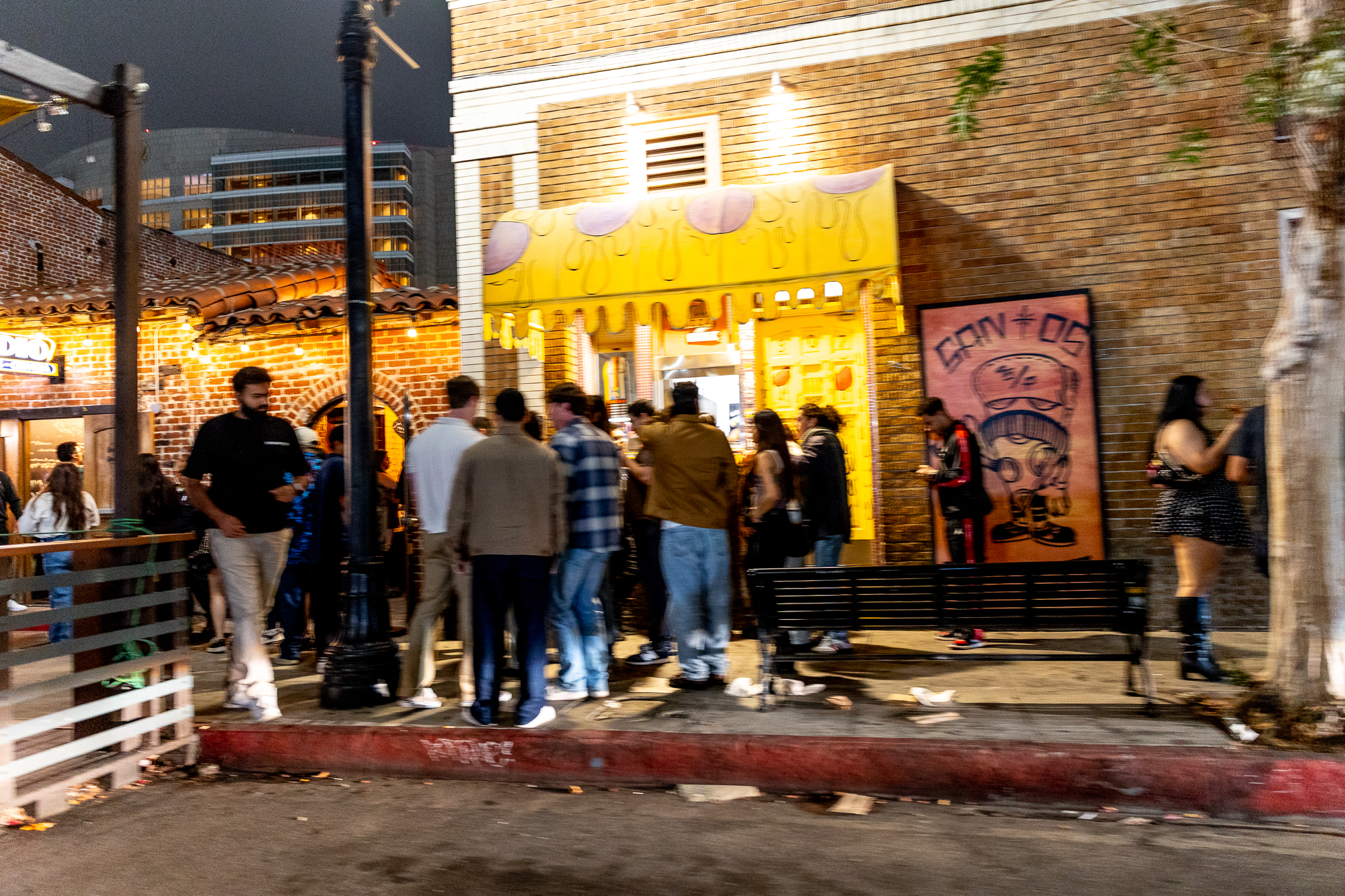
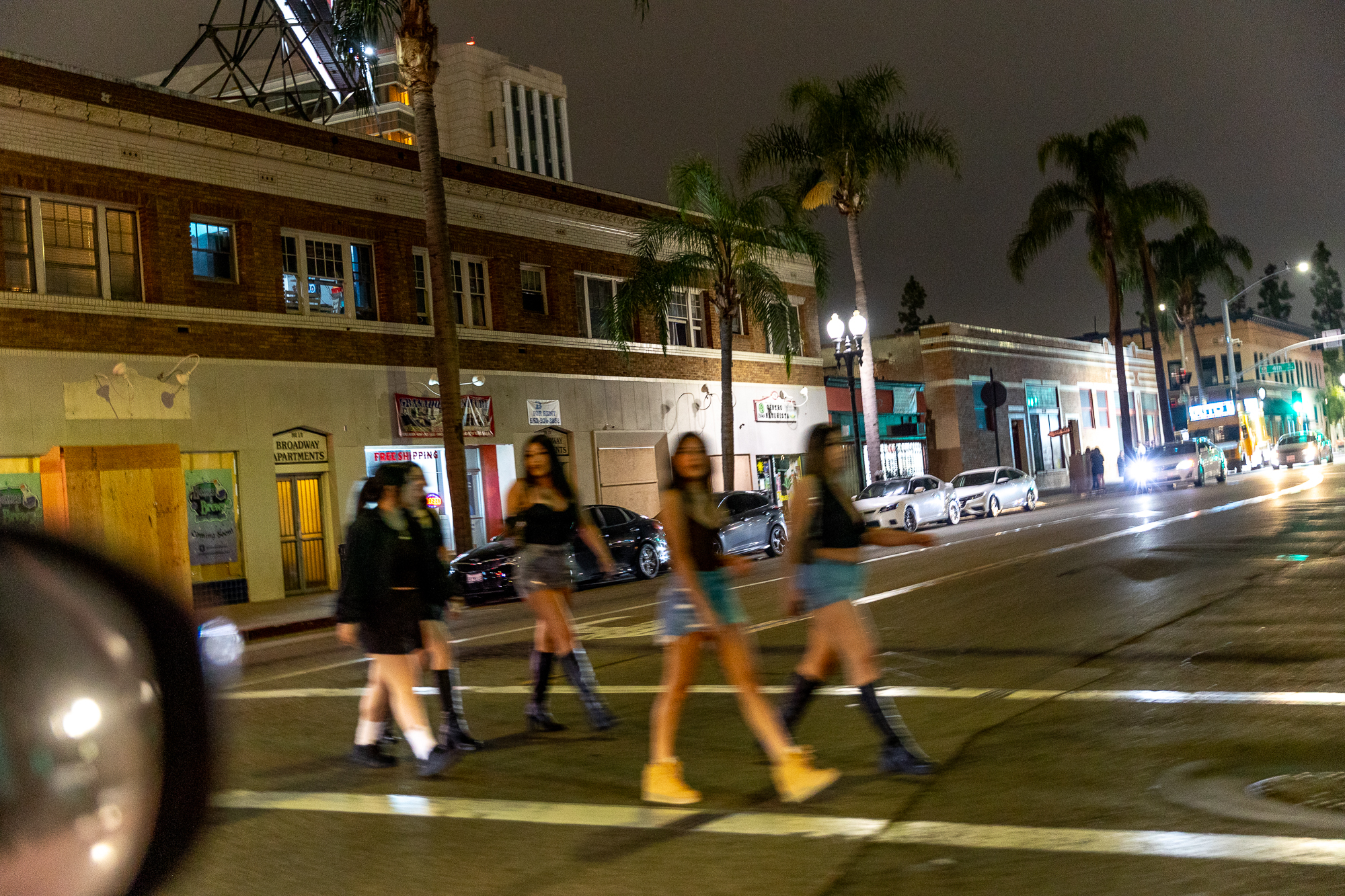
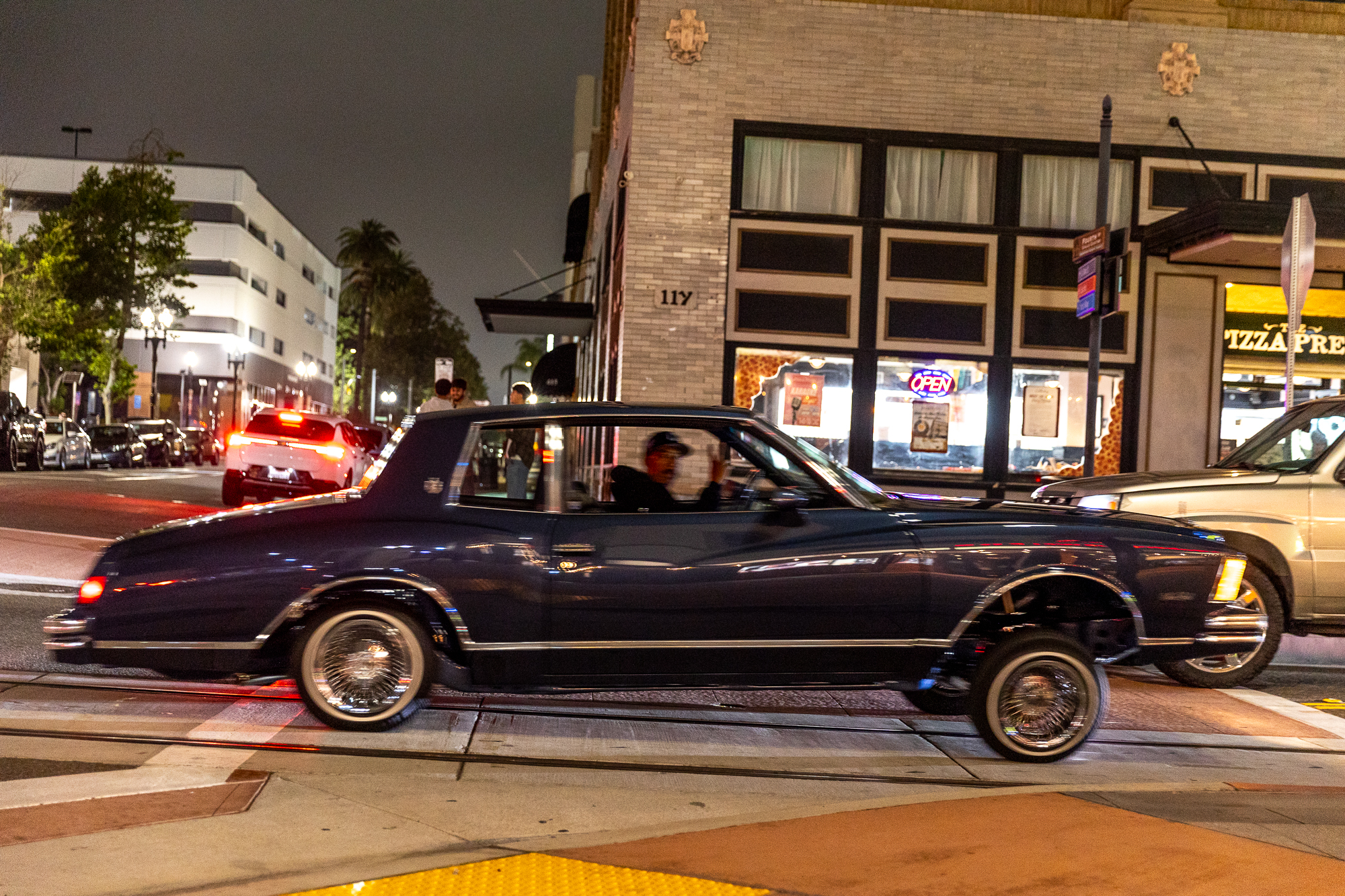
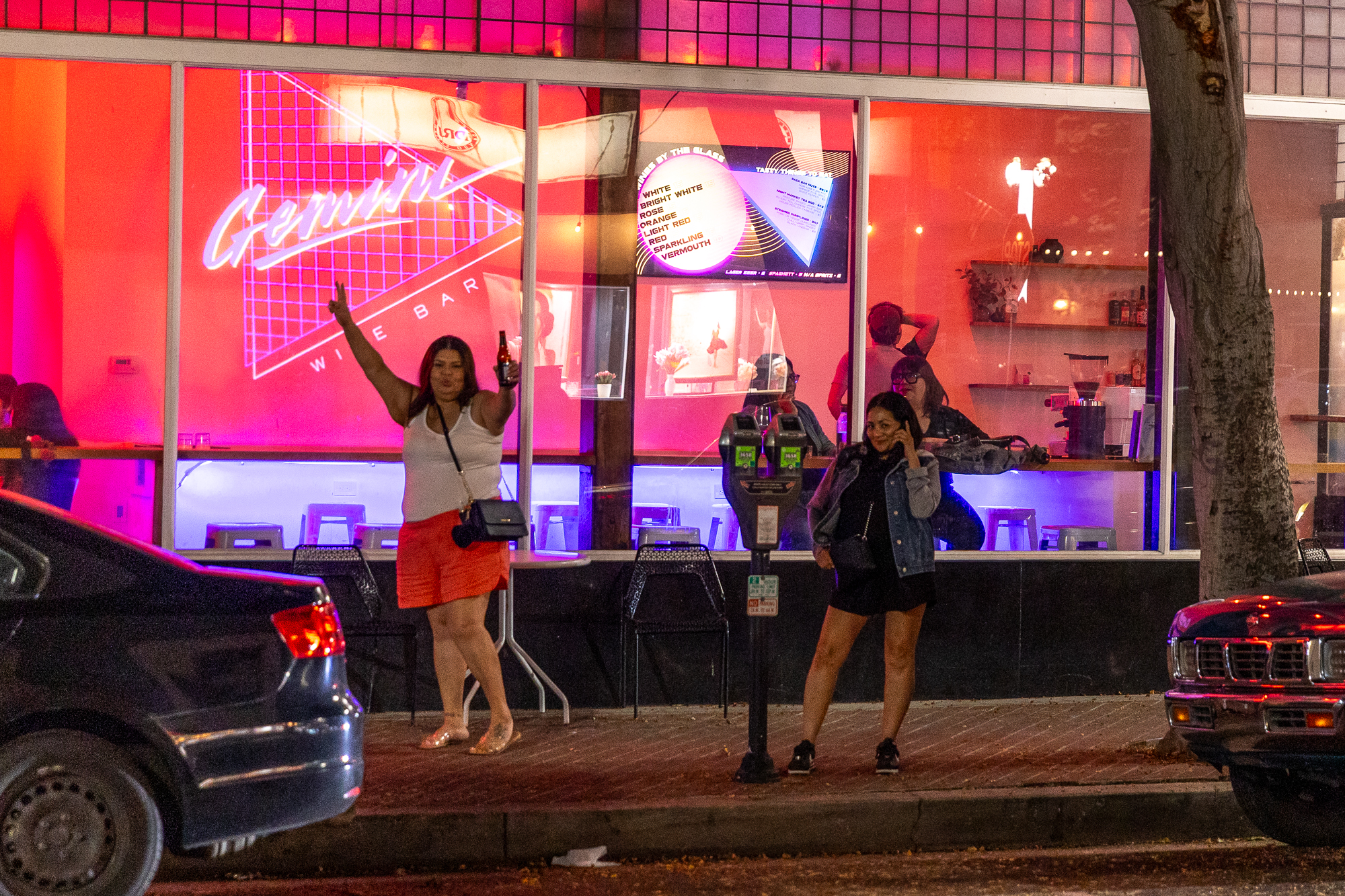
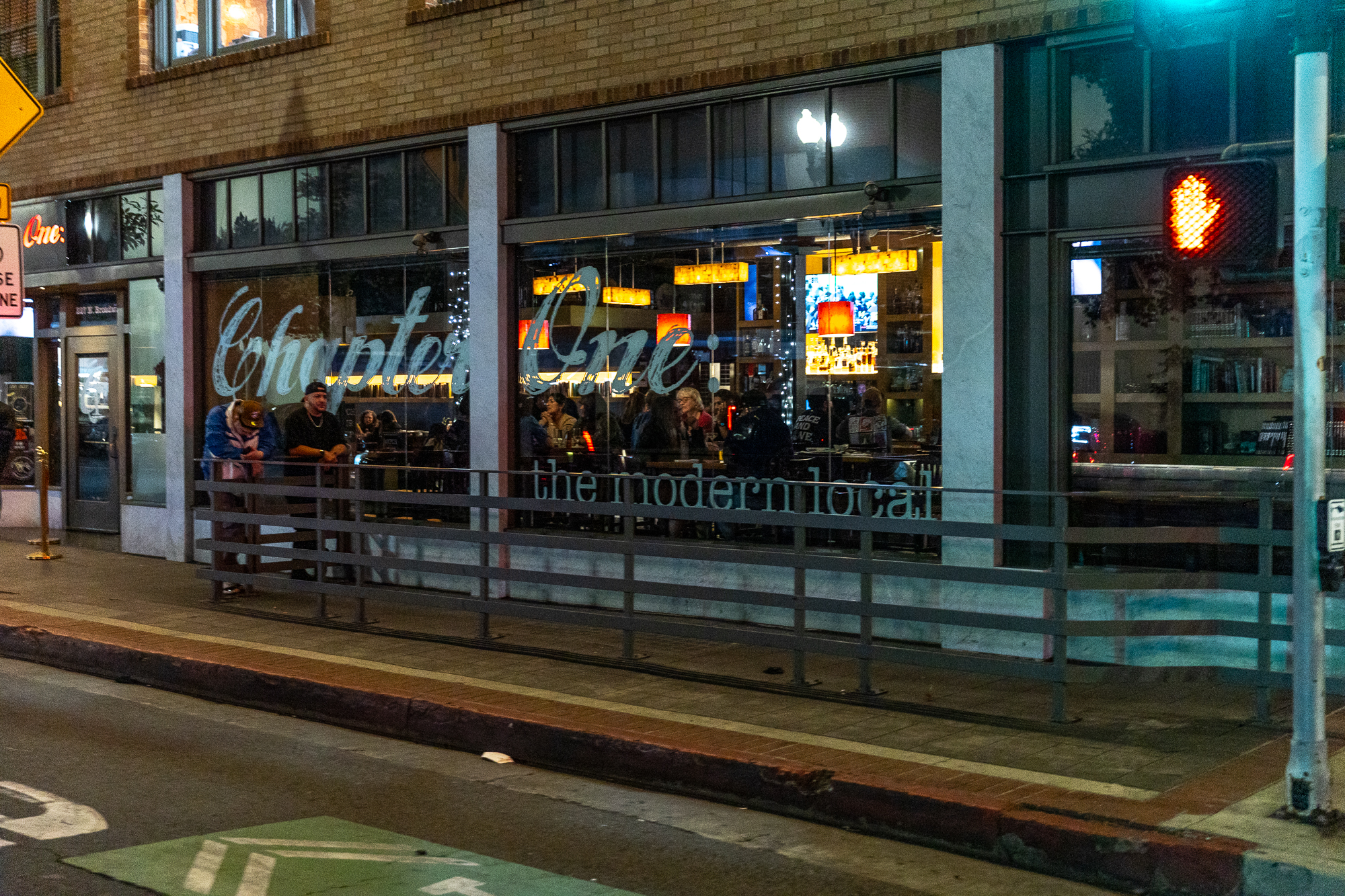
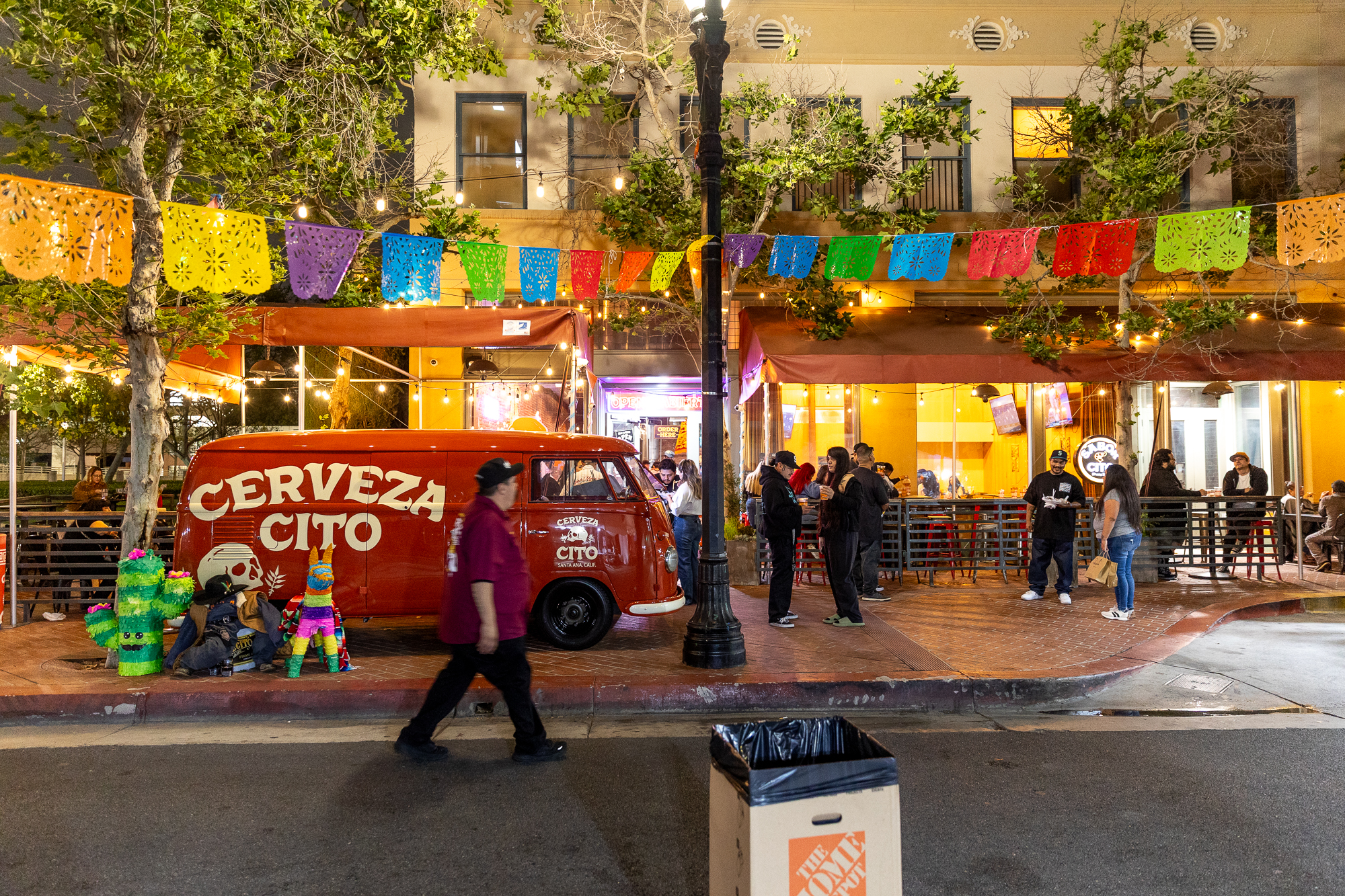
It was night now. Reggaeton and roaring engines could be heard in the distance. The stores we walked across were dark and gated shut, while the many drinkeries and taco trucks started to wake with colorful lights and loud conversations flooding into the sidewalks. I then asked him how he felt about the area “becoming more hip” in recent years.
“We have to protect the old ways, but there has to be a balance of respecting what used to be here and what’s new. This project is messing up the balance completely, though.” We went mute for a moment to pass a brewery blasting banda music.
“You’re putting in a whole different tax bracket into another place, displacing a lot of people who’ve already had their lives here. It saddens my heart a little bit because I don’t feel that’s the right way to do things.”
A few days after our talk, the conversations about Santa Ana, the fears of the renters and shoppers, and local artists, the dreams of the politicians, the profit margins, inflation, and population data, were all swirling around in my head.
I decide to go back to Metro Town Square, walking around this time. Now, without a windshield, the scale completely shifts. What looks from the outside like a negligible space becomes an expansive graveyard of lots and clusters of businesses. Peering through the windows reveals eerily empty, large-scale warehouses without a soul inside. It’s hard to imagine now just how much this place once flourished. There used to be people and businesses, a thriving part of the city. So many stories. So many laid to rest here, soon to be paved over.
It’s early morning as a handful of parents get groceries and young families amble into the clinics. People are few, but there’s still some life left. I sit in the trunk of my car, watching the people go to and fro, and think about the inevitable cycle of change. Then, like everything else in this world, I leave.
The only thing in my control is to hope some good will come from this ending.